

Most operations leaders are funding AI expansion, which means more tools and deeper integrations, before confirming their teams have the foundation to use what they already have. The result is a budget spent on features nobody on the team is ready to use, while other teams sit on generic training long after they need advanced tooling.
Assessing team-by-team enablement versus expansion turns AI investment into a decision built on evidence.
AI enablement vs. expansion, explained
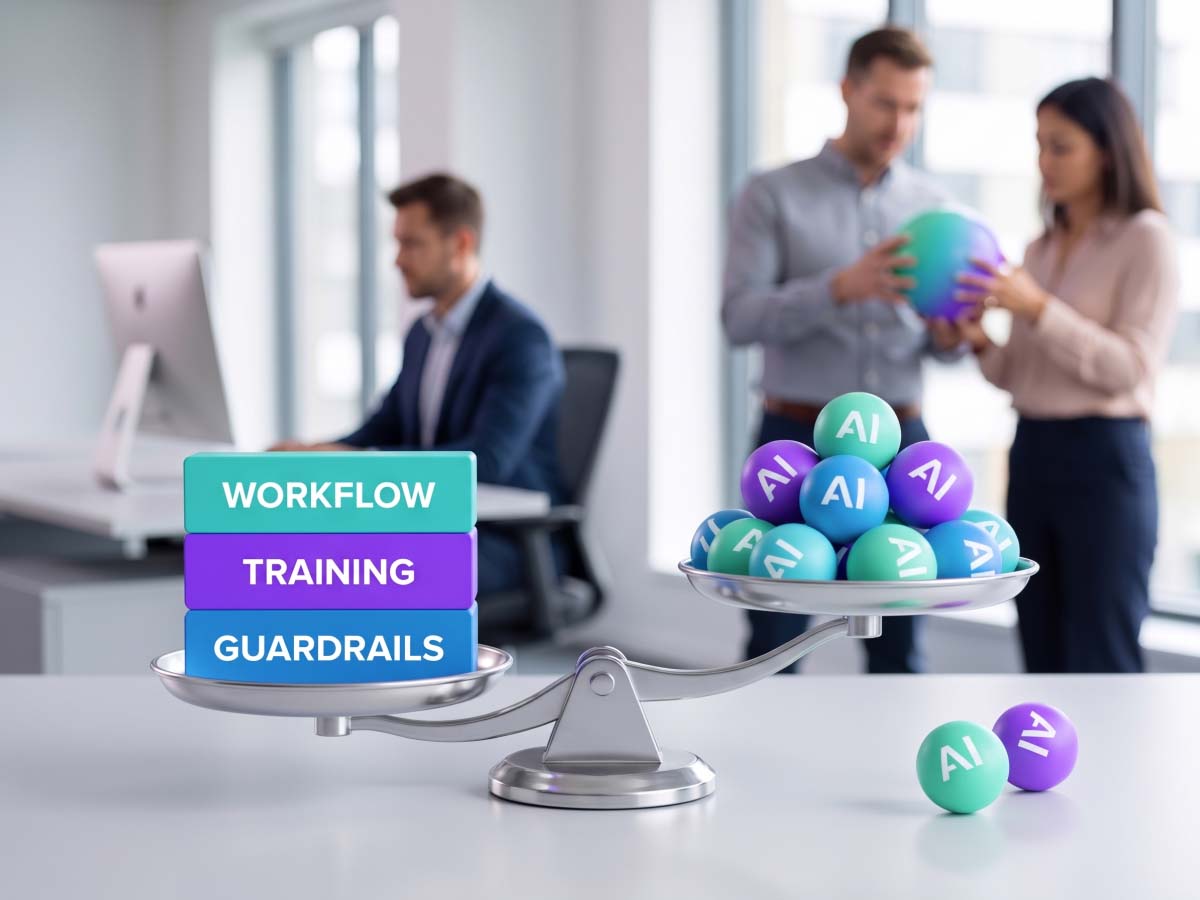
AI enablement is the foundational work: defining workflows, training people and setting guardrails so a team can use AI reliably.
AI expansion means giving an already-capable team deeper tooling, tighter integrations or more autonomy.
Confusing the two is a common reason AI budgets underperform: enablement-stage teams get expansion-stage tools they aren’t ready for, while expansion-ready teams stay stuck in generic training. The table below highlights examples of each, showing the key differences between AI enablement and AI expansion.
| AI enablement | AI expansion | |
|---|---|---|
| Definition | Providing employees and teams with the AI tools, training and workflows needed to do their work more efficiently and effectively | Scaling AI adoption across more tools, teams, use cases or business capabilities to expand AI’s reach across the organization |
| Primary goal | Depth: It improves how AI is used via workflows | Breadth: It improves the use of AI across the organization |
| Success metric | Productivity boost, output quality, time saved on each task | Number of tools deployed, % of employees/departments using AI, usage volume |
| Risk potential | Underutilization, which means tools are adopted but not integrated within workflows | Tool sprawl |
| Executive owner | COO | CEO / CFO |
| Example in practice | Training a content team to use AI for first-draft generation within an existing editorial process | Rolling out AI copilots across sales, support, HR and finance at once |
Why the difference shapes your investment decisions
According to ActivTrak’s 2026 State of the Workplace report, 80% of employees now use AI tools, yet only 3% fall into the usage range tied to the strongest productivity gains. Adoption isn’t the constraint anymore. Matching the right tier of investment to each team is.
ActivTrak’s AI Adoption Maturity Model provides the framework you need to help your organization progress into maturation.
The four dimensions to assess team-level AI readiness
Score every team across these four dimensions before deciding where the new AI budget goes.
1. Workflow integration and daily AI usage patterns
Sporadic, one-off AI use signals an enablement need. Consistent use embedded in defined workflows signals readiness to expand. ActivTrak’s workforce data shows retention is the leading indicator: employees with over a year of continuous AI use behave very differently than those who tried a tool once and stopped.
2. Data access, tooling maturity and technical foundation
Can the team reach clean, relevant data and integrate AI into systems they already use? Teams juggling disconnected tools without integration typically need enablement first. The average organization now runs seven AI tools, and sprawl without a technical foundation rarely produces returns.
3. Governance, oversight and risk tolerance
Teams without documented usage policies or review processes need guardrails before more autonomy. Governance gaps usually show up as inconsistent AI use across otherwise similar roles.
4. Culture, trust and change readiness
A team that trusts AI outputs enough to act on them, and has already absorbed change well, is a better candidate for expansion than one still building basic confidence in the tools.
Signs a team needs foundational enablement
There are four key signs that your team needs foundational AI enablement:
- AI use is inconsistent across similar roles
- No documented guardrails or usage policy exists
- Employees use AI for isolated tasks, not full workflows
- Managers can’t say which tools are actually driving output
Signs a team is primed for expanded tooling
Look for these signs, which indicate it’s time to expand your AI tooling; these are the major indicators of readiness:
- AI use is consistent and embedded in daily workflows
- Governance and usage guardrails are already in place
- Usage data shows measurable productivity gains from current tools
- Leaders can name the specific gaps deeper integration would close
Building a team AI readiness scorecard
Turn the four dimensions into a repeatable, team-by-team score rather than a one-time gut check.
Scoring criteria and how to weigh each dimension
Score each dimension from 1 to 4 based on observed usage data, not self-reported confidence. Weigh workflow integration and governance most heavily. They’re the strongest predictors of whether new tooling gets adopted rather than shelved.
How does this scoring look in practice? Below is a table showing an example scorecard from “Organization A.” Note that workflow integration and governance/oversight hold the same higher weight; these are the most important factors to consider when scoring.
Each dimension shows a score aligned with usage data; This score is applied to the weighted average and calculated as a weighted score. The composite score is the sum of all weighted scores, and this is the calculation showing your organization’s AI readiness. Is Organization A ready for AI expansion? Probably not; the company should address its issues with tool governance before expanding further.
| Dimension | Raw score (1 – 4) | Weight | Weighted score |
|---|---|---|---|
| Workflow integration | 3 | 0.3 | 0.9 |
| Governance & oversight | 2 | 0.3 | 0.6 |
| Data & tooling maturity | 3 | 0.2 | 0.6 |
| Culture & change readiness | 4 | 0.2 | 0.8 |
| Composite score | 2.9 / 4 |
ActivTrak’s AI impact solutions build this scoring directly from behavioral data instead of survey responses.
Turning an AI team development strategy into investment decisions
Low scores across the board mean the team needs enablement funding: training, guardrails and workflow definition. High scores mean the team is ready for expansion budget. Because the score is built on a team’s own usage data, it holds up directly in the budget conversation instead of resting on an industry benchmark from a different organization.
ActivTrak’s Enterprise AI Adoption Maturity Framework provides a strategy to help you scale AI tools and investments over time.
Make readiness a recurring discipline
Team AI readiness isn’t static. A workflow that needed enablement six months ago may be ready to expand today. Leaders who reassess and reinvest by team turn AI spend into measurable performance gains.
Most leaders can’t say whether AI is actually improving productivity. See how ActivTrak’s AI impact solutions turn real usage data into the evidence base for smarter, team-by-team AI investment decisions.
FAQ
What is the difference between AI enablement and AI expansion?
Enablement builds the foundation a team needs to use AI reliably: defined workflows, training and guardrails. Expansion gives an already-capable team deeper tooling, tighter integrations or more autonomy. The right investment depends on which stage a team is actually in, not which stage leadership assumes.
How can you determine if a team is ready to expand into additional tools or if it needs AI enablement support?
Look at usage data, not assumptions. Consistent, embedded AI use with governance already in place points to expansion. Sporadic use without guardrails or defined workflows points to enablement first.
How often should team AI readiness be reassessed?
Reassess quarterly, or whenever a team’s usage patterns shift meaningfully. Readiness moves as fast as adoption does, so a team’s score today won’t hold for long without a fresh look.
How is team-level AI readiness different from enterprise-wide AI readiness?
Enterprise-wide readiness measures organizational factors like data infrastructure and strategy. Team-level readiness measures how a specific group actually uses AI day to day, which is a stronger predictor of whether new investment will get adopted.
How do you turn an AI readiness assessment into a budget decision?
Weigh governance and workflow integration most heavily, since they predict whether new tooling actually gets used. Then map each team’s score to a tier: enablement funding for low scorers, expansion funding for high scorers.
What are common mistakes leaders make when assessing AI readiness?
The most common mistake is treating readiness as a single, enterprise-wide score. Usage varies widely by team, and an organization-wide average hides which specific teams need enablement versus expansion.
What dimensions should you score when assessing team AI readiness?
Score workflow integration, data and tooling maturity, governance and risk tolerance, and culture and change readiness. Together, these four dimensions show whether a team needs foundational support or is ready for more advanced tools.