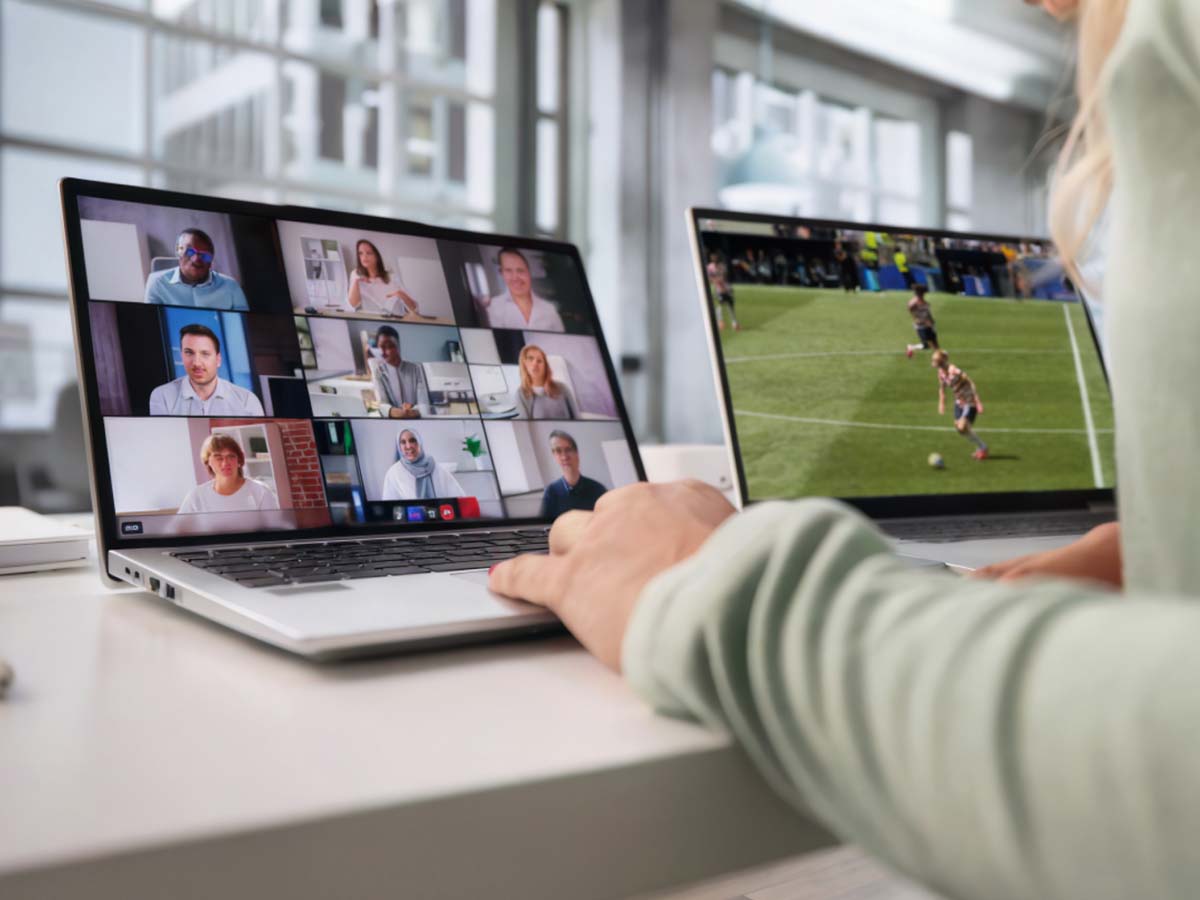


Major sporting events like the World Cup semi-finals often spark concern among managers about lost productivity and endless workplace distractions. The traditional instinct is to crack down on streaming or strictly enforce screen monitoring during big broadcast windows.
However, today’s workforce data tells a far more nuanced and encouraging story: When given the flexibility to engage with cultural moments, employees don’t abandon their obligations. They simply adapt how they manage their time.
Embracing this flexibility isn’t just about tolerating distraction. It’s a cornerstone of positive employee experience and healthy workplace culture. When organizations extend trust during major events, it boosts morale, supports quality of life and prevents disengagement without sacrificing business results.
Recent data analyzing employee behavior during the July 14-15, 2026 World Cup semi-finals reveals exactly how employees navigate these moments when given the room to do so.
What the data reveals
The ActivTrak Productivity Lab examined a dataset spanning 123,430 employees across 1,868 ActivTrak accounts. Compared to baseline behavioral data from prior years to control for seasonal and day-of-week patterns, two findings stood out:
- Overall engagement: 6% of employees (7,431 people) engaged with World Cup content on their work devices during the semi-finals, while 2.4% specifically searched for match-related content.
- Dedicated followers: About 0.65% of employees (1,525 people across 518 accounts) were classified as “followers,” meaning they spent 10 or more minutes engaging with World Cup content on either semi-final day.
Employees didn’t do less work. They simply worked differently by shifting when they worked and how they organized their day.
Output remains steady while working hours shift
Despite match viewing, actual productive output barely changed. The ActivTrak Productivity Lab found:
- Productive hours stayed steady: Followers logged 6.04 hours of productive output per day during the semi-finals, compared to a prior-year baseline of 6.09 hours.
- The workday extended: To make up for time spent following the matches, followers stayed at their desks longer, extending their workday by 14 minutes on day one and 9 minutes on day two.
- Productivity continued during the biggest matches: During the peak 3 – 6 p.m. broadcast window, productive minutes remained solid at 97.2 minutes compared to 96.3 minutes in the baseline period.
Focus shifts even when productivity holds steady
While output held steady, employee focus experienced notable changes:
- Context switching increased: Overall context switching between work and match coverage rose by ~20% across the day. During the 3 – 6 p.m. match window, context switching spiked by 40% on day one and 43% on day two.
- Focus sessions shortened: Uninterrupted productive session lengths dropped from an average of 18.8 minutes down to 14.1 minutes (a 12% decline relative to norm).
- Focus hours dipped: Dedicated focus hours declined slightly from 3.88 hours to 3.59 hours (−2.4% vs. norm).
- Passive screen time went up: Passive time (on-screen time without keyboard or mouse input) increased by 12 minutes (+15% vs. norm).
What the World Cup productivity data means for organizations
Rather than completely disconnecting, employees who follow major live events compensate by shifting their focus and extending their working hours. For leaders and HR teams, this data highlights that flexible work norms allow teams to balance high-interest events without sacrificing total daily output.
Rather than viewing live events as productivity drains, forward-thinking organizations recognize them as opportunities to foster well-being and team cohesion. Employees who enjoy the autonomy to catch a match willingly self-correct by working a bit later to meet their commitments.
To turn these moments into a win for both culture and performance, consider these best practices:
- Shift your focus from hours to outcomes: Measure success by project completion and goal attainment rather than rigid, continuous desk time. When output expectations are clear, micro-distractions become self-managing.
- Normalize shared cultural moments: Host official watch parties in breakrooms or create dedicated online channels for live commentary. Acknowledge the event brings social value to the office rather than driving behavior into secret multi-tasking.
- Encourage asynchronous communication: Expecting instant responses during a globally shared moment increases context-switching fatigue. Giving employees leeway to reply asynchronously during match windows reduces stress and lowers cognitive overload.
- Protect well-being and prevent guilt: Autonomy only works if employees feel permitted to use it without fear of penalty. Explicitly signaling that taking a break for a match is acceptable strengthens trust and supports long-term quality of life.
Ultimately, severe restrictions yield diminished returns, while flexibility builds lasting engagement. When leaders empower their workforce to balance shared passions with daily responsibilities, they create a resilient workplace culture where both employee satisfaction and performance thrive.