

Work is evolving rapidly. As organizations navigate hybrid teams and the role of AI, many leaders struggle to answer fundamental questions: What’s actually happening across the workforce? And how do leaders make confident decisions when work keeps changing? This is where behavioral work data comes in.
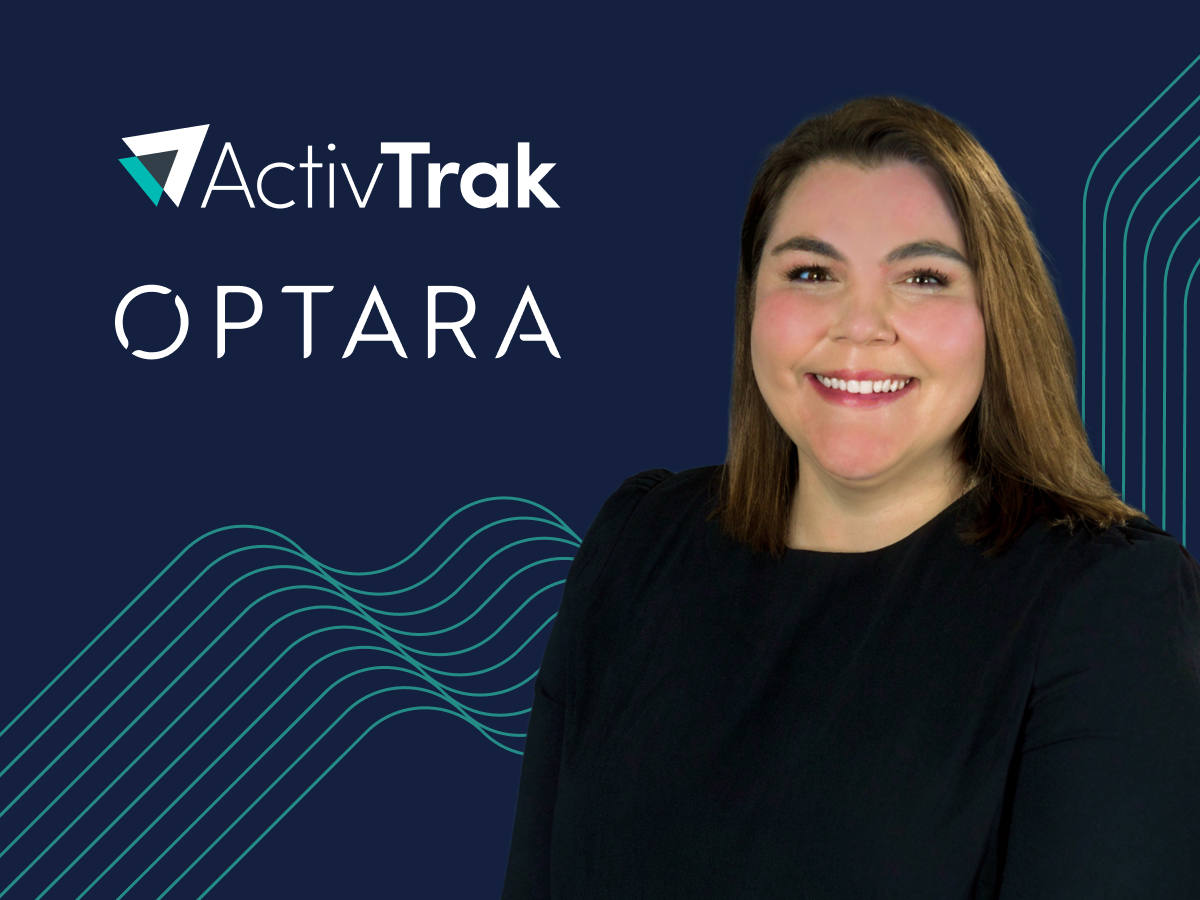
Sarah Altemus, principal of performance and transformation at ActivTrak, recently joined Aramis Hernandez on the inaugural episode of Optara’s Risk to Roadmap podcast to discuss what behavioral work data reveals about how work gets done.
Explore five takeaways below.
Key takeaways:
- As the workplace evolves faster than ever, leaders need to change their questions and get better data to prepare for the future of work.
- The hybrid debate has changed from asking where people should work to understanding where employees work most effectively.
- AI is not replacing people but rather adding new tasks or opening up new capacity, and only leaders with the right insights can see where and how it’s happening.
- Organizations must build trust with their employees to get the data they need and implement effective changes together.
What the hybrid debate gets wrong
Many leaders are still stuck on the wrong question when it comes to hybrid work. Instead of asking where people should work, it’s important to understand where work happens most effectively.
As Sarah points out, there’s no single work model that outperforms others. Different environments support different types of work. For example, focused work (like content writing or software development) is often best suited for remote environments, while collaboration and ideation (like brainstorming or strategy development) may benefit more from in-person interaction.
ActivTrak’s 2026 State of the Workplace data bears out the pros and cons of different models:
- Office-only workers rate highest in employee focus efficiency (64%) and longest productive sessions (41 min).
- Office-first organizations also show the highest levels of underutilized employees (20%) and overutilized employees (32%).
- Hybrid workers had the longest working hours but lower productive and focused time.
- Regular hybrid and remote-first companies have the highest share of healthy employees (76% each).
Organizations need to know whether their work model supports employee productivity while balancing corporate culture and employee health. The answer is different for every organization based on their workforce data.
How AI is changing (not reducing) work
Contrary to popular belief, AI appears to augment work rather than replace it.
Across every category ActivTrak measured, activity increased for workers – including a significant increase in time spent on email. Employees who use AI most effectively use it to do more than they did previously, not the same amount of work more efficiently.
Organizations also use an average of seven AI tools today, and 83% of organizations use six or more. This is a huge increase from two years ago, when organizations averaged two AI tools. AI change is happening from week-to-week instead of year-to-year, which is a dizzying pace for any new technology shift.
The question leaders should now ask: Is AI eliminating low-value work, increasing output or simply creating more activity?
Why leaders need to think beyond AI adoption
Giving employees AI tools is just the beginning. Organizations need visibility into how employees use AI and what high performers do differently.
ActivTrak found employees who spend 7-10% of their time using AI show the highest productivity efficiency. But only 3% of all employees fall in this sweet spot. In fact, more than half of employees (57%) spend less than 1% of their total time using AI tools.
The trick is figuring out how to operationalize and scale AI usage beyond simple adoption. Training, workflow improvements and measurement all play a role.
Leaders need organizational clarity, feedback loops, visibility into adoption maturity and clear accountability. For example, ActivTrak hosts internal monthly roundtables where employees share AI use cases and workflow improvements. This gives leadership a glimpse into what’s happening from the employee perspective, and gives employees ways to share their knowledge.
The crucial role of trust and transparency
Measuring how changes in your organization – including AI adoption or workplace mandates – takes more than self-reported employee surveys or the raw count of hours your existing tools may give you. Behavioral workplace data shows you how work gets done, so you can see how AI impacts productivity or which workers benefit from a hybrid schedule vs. working in-office.
Employees often have valid concerns about the invasive nature of some monitoring and workforce analytics tools. As Sarah emphasized, organizations should rely on privacy-first behavioral insights rather than Big Brother-style keyboard stroke monitoring.
In fact, organizations that are transparent with their goals and methods tend to see results faster when gathering workforce analytics and implementing changes based on learnings. This transparency leads to better conversations about workflows, tools and productivity – so organizations can grow from the team level up.
The next era of work requires fewer assumptions and better questions
So what does the future of work look like? The possibilities change daily. Just as the onset of remote work challenged assumptions about where productivity happens, AI is creating uncertainty around how work happens. And the rules keep changing.
Work is evolving too quickly for leaders to rely on old assumptions, anecdotes or conventional wisdom. For organizations to thrive, objective data is a must.
Continuous measurement that drives adaptation is more valuable than trying to predict exactly what work will look like several years from now. Good leaders will start there and let the data lay their plans for them.
Listen to the full Risk to Roadmap podcast: Your Team is Using AI. Is it Actually Helping?