

Table of contents
- What is team productivity?
- Why is it important to measure team productivity?
- How do you measure team productivity?
- Productivity measures compared
- How to measure team productivity in hybrid and remote teams
- Tips for improving team productivity
- Measure team productivity with ActivTrak’s award-winning software
- FAQ
While company-wide strategies set the vision for an organization’s overall direction, it’s productive teams that bring that vision to life by meeting goals, serving customers and moving the business forward.
That’s why understanding team productivity is critical. How do you compare one team’s performance to another, and what makes one team outperform another?
Once you understand how to measure productivity, you can develop strategies to improve productivity among both teams and individuals. This article explores strategies to boost team and individual productivity and improve morale in the process. Learn the KPIs that matter for each team, how to measure them and next steps to transform workflow processes. Crucially, uncover the KPIs that help improve productivity for remote and hybrid workers.
What is team productivity?
Team productivity is the total output of work from a group of people working together toward a shared goal. It measures how much a group of employees produces in a set amount of time, as well as how well they do it. To assess a customer support team’s productivity, for instance, you’d look at the number of tickets closed alongside customer satisfaction scores.
Team productivity goes beyond the performance of individuals — it reflects how effectively a group collaborates. It’s about how well team members align, communicate and support one another to drive meaningful results.
Why is it important to measure team productivity?
Measuring team productivity gives you a more complete view of performance — one that individual productivity metrics alone don’t provide. While tracking hours worked or tasks completed reveals how productive someone seems, it doesn’t tell you how well they contribute to shared goals or function within a team environment.
For example, consider a high-performing employee contributor. They may work efficiently, autonomously and quickly complete tasks. But do they collaborate well? Do they communicate clearly, resolve conflicts and contribute meaningfully in group settings? Without team-level insights, gaps in collaboration, alignment or even trust often go unnoticed.
There’s also the risk of social loafing — a well-documented phenomenon where individuals put in less effort when working in groups. Without measuring team dynamics, it’s hard to pinpoint whether the issue lies with workload distribution, unclear goals or disengagement.
Plus, studying and improving team productivity is good business sense. New hires who collaborate with coworkers from day one are at least 65% more likely than their isolated peers to stay long enough at a company to become productive and profitable.
KPIs to monitor productivity for each team
| Team | KPI | What it measures |
| Sales | Quota met | Revenue achieved vs. target |
| Pipeline velocity | The speed at which deals move through the funnel | |
| Sales conversion rate | Leads converted to closed deals | |
| Billable rate | Time spent on revenue-generating vs. admin tasks | |
| Engineering | Sprint velocity | Number of tasks finished during a sprint |
| Work cycle | Time it takes from inception to delivery | |
| Frequency of deployment | How often products end up in production | |
| Focus time | Blocks of time spent coding or working | |
| Support | Percent of resolution | How many complaints or interactions have been resolved |
| Customer satisfaction | How happy clients are overall (on a scale) | |
| First-contact resolution | How many interactions were resolved during the first call or email | |
| Utilization rate | Work time vs. admin time | |
| Marketing | Campaign output rate | Number of campaigns in any given period |
| Marketing-qualified leads (MQL) | Leads that meet qualified criteria | |
| Content production goal ratio | Did content production meet goals? |
How do you measure team productivity?
While the basic formula for calculating team productivity is straightforward, successfully benchmarking and measuring it is anything but. There are five different ways to measure productivity. The good news? Once you get used to assessing and addressing team productivity, those measurements become second nature. And with the latest developments in productivity management software, it’s easy to automate much of the work.
Here are five of the most common methods for measuring productivity at the team level.
1. Productivity measurement software
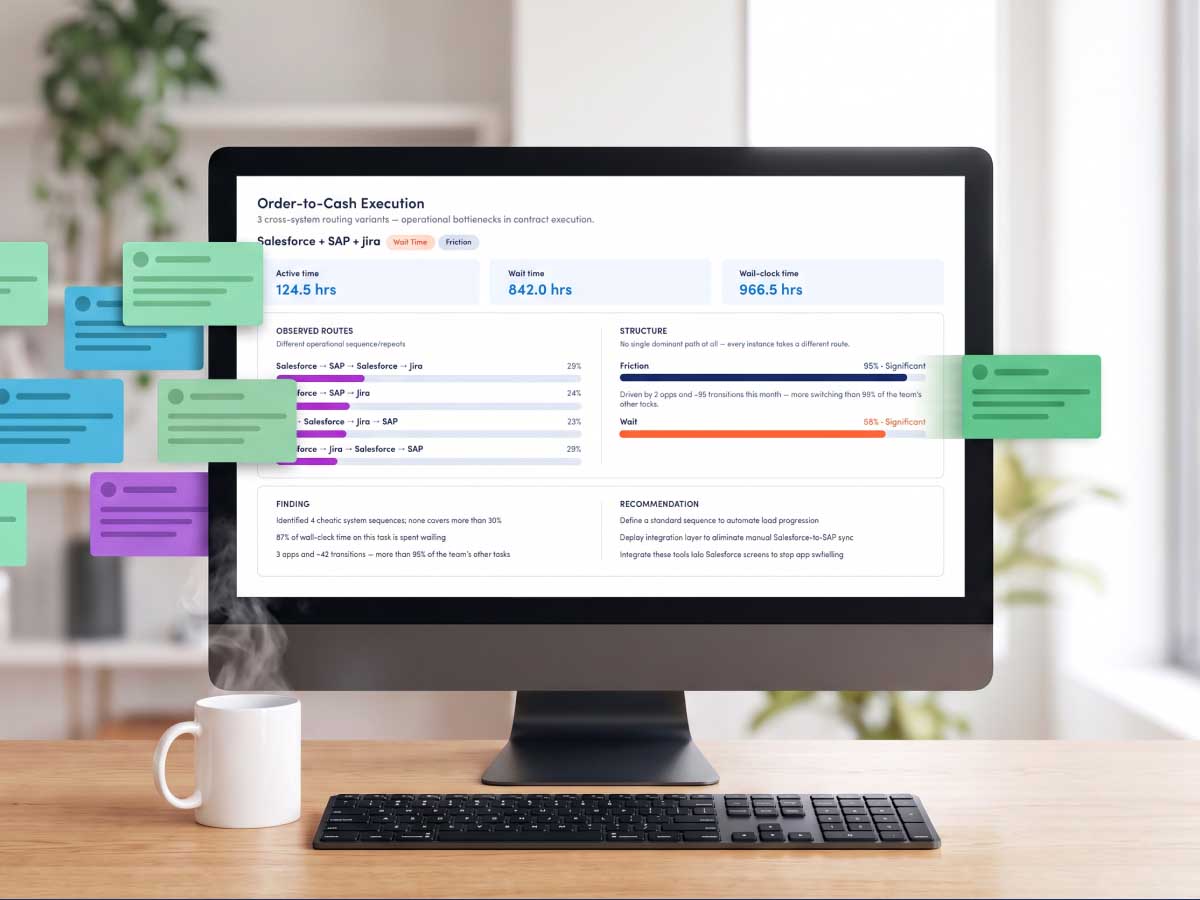
The simplest, fastest way to measure team productivity is with productivity management software like ActivTrak. This platform analyzes activities across teams and departments and delivers findings in easy-to-understand dashboards.
Using team productivity dashboards allows you to see how much time employees spend on different activities, both at the individual and team level. It shows you the total hours that go into getting a job done, as well as how work is distributed across team members. You’ll also see how productivity levels change based on where people work — a reliable method for measuring remote work against in-office collaboration.
If you want a high degree of accuracy, productivity management software is ideal. These tools automatically collect and analyze employee activity data, allowing you to compare productivity between employees on the same team, or productivity for entirely different teams as a whole.
2. Manual productivity tracking
If you prefer to calculate productivity yourself, you’ll need to maintain spreadsheets and conduct manual analysis. Some of the most common methods include:
- The basic productivity formula: Divide output (what your team produced) by input (what team members did, or which resources they used, to achieve that output). So if it took 100 hours for your IT team to resolve 80 help desk tickets, the calculation would be 100/80 = 1.25 hours per ticket.
- The planned-to-done ratio: Measure the amount of completed work and compare it to the amount originally assigned to your team.
- Cycle time metric: Measure the amount of time it takes to complete a team project from start to finish.
While these productivity measures provide a baseline for understanding team productivity, they won’t tell you the full story, such as why it took longer to complete less work than anticipated. You’ll need to incorporate other methods to answer those underlying questions.
3. Surveys and 360-degree feedback
To use surveys and 360-degree feedback, ask team members to rate each other in areas related to team productivity. Do employees show respect for each other? Do they understand team goals? Do they motivate one another? Sending out regular surveys will help reveal the answers to these questions and others like them.
However, it’s important to note limited responses or personal preferences often skew this data. Team members may give high ratings to employees they work closely with and mark others lower on the scale, simply because they haven’t had the opportunity to collaborate with them yet. This method also means adding tasks to team members’ to-do lists, which may limit their willingness or ability to answer fully.
4. Measure productivity using progress toward team goals
This method works well for teams with clearly defined goals and timelines. Start with the number of objectives your team set at the start of the month, quarter or year. Then calculate the percentage completed when your specified period ends. If your marketing team set a goal to create 10 new landing pages and ended the quarter with nine, this calculation tells you the team reached 90% of its goal.
When combined with surveys and 360-degree feedback, this method shows you how different team dynamics impact results. It also tells you when it’s time to change course. A team that repeatedly falls short of goals may need to get better at collaborating, or they may be overworked and need your help redistributing unbalanced workloads.
5. Focus time vs distractions identifies productivity issues
Another way to measure team productivity is to look at how team members spend their time. Why? Because while collaboration is key, not all team performance happens when everyone’s in the same room. For employees to achieve goals together, they must first devote individual time to critical thinking and deep work.
Start by calculating how much time your team spends in meetings. Then look at how many of those meetings are unnecessary or ineffective to see if team productivity is suffering as a result. If you use productivity management software, look at website and application usage dashboards to gauge how much time goes to productivity-draining distractions like endless team chats or constant pings. These metrics help you understand if you need to protect individual focus time, ensuring the time team members do spend together is actually productive.
Productivity measures compared
| Method | Use case | Effort | Limitations |
| Productivity management software | A team that needs deeper insights into productivity, time allocation, etc. | Low to medium | Companies need to be mindful when communicating the use of these tools to employees, ensuring they understand how the software will be used. |
| Manual tracking | Smaller teams or those who have a limited budget for software costs | High | Time is a major issue, and managers cannot always analyze workforce data meaningfully if they don’t understand the trends behind the actions. |
| Feedback and surveys | Assessing collaboration and workplace culture/dynamics | Medium | Employees may not answer honestly or they may be biased. |
| Progress toward goals | Any team with a defined end goal | Medium | There may be no reason why a team or an individual didn’t hit their goal. There is no data to show if other issues impacted goals and objectives. |
| Focus time vs. distracted work | Teams that need to understand deep work trends | Medium | It doesn’t show the output; managers only can understand the time an individual or team was productive. |
How to measure team productivity in hybrid and remote teams
Measuring productivity among remote or hybrid teams looks different when compared to in-person teams. The big question for managers relates to efficiency, time management, and productivity. Are remote and hybrid employees actually working? If they are working, how distracted (or efficient) are they?
To answer these questions, companies may assess outcome-based KPIs like task completion, but time management and team collaboration also provide perspectives on how remote and hybrid teams work with other employees.
Managers may struggle to balance surveillance with accountability. Tools like ActivTrak help companies assess the metrics that matter, without overstepping into micromanagement. With ActivTrak, managers can review time allocation, location information, productivity, and focus time metrics. ActivTrak also helps companies assess and measure goal completion and sends alerts when employees may use tools that are designed to manipulate productivity metrics (like mouse jigglers) or when they access sites or tools that misalign with company policies.
Tips for improving team productivity
Once you decide how to measure team productivity, the next step is improvement. While every organization is different, here are some ways to improve team productivity.
Support team collaboration
A collaborative team is a productive team. Ensure your team has the right tools to work together – like Zoom, Slack, or other programs designed to keep employees connected. Company policies should also emphasize team collaboration. This is especially essential for remote or hybrid teams, where employees may feel isolated.
Encourage feedback
Feedback can be a gift. By encouraging team members to actively solicit and offer feedback, companies can create a culture of open communication and collaboration. Help team members understand how to provide positive and actionable feedback that encourages growth and confidence.
Create goals and stick to them
Goals help teams and individuals move forward. Everyone needs to understand their priorities and know their endgame, which also helps improve measurable productivity. Help individual employees and teams set realistic goals and create the steps that lead to results.
Emphasize transparency and accountability for everyone
Transparency ensures everyone knows what is happening within the organization – no surprises or gotcha moments. Everyone – from managers to interns – should embrace transparency within the organization. When companies foster a transparent environment, the culture thrives. This also helps people feel accountable, which is also crucial for positive team dynamics.
Limit meetings to minimize time waste
Meetings can be a time waste and may impede work productivity. There is a reason why there are coffee cups emblazoned with “I survived a meeting that should have been an email.” Reserve meetings for essential communications, and use email or Slack wisely.
Encourage growth and development
Growth is crucial for forward mobility and helps improve productivity. Encourage employees to learn new skills, take classes that help them advance in their field, or participate in an industry event or conference. Growth and learning allow employees to face new challenges, and companies that encourage growth also show employees that they matter and that they are valuable.
Balance workloads across teams
Measuring productivity allows companies to identify unbalanced workloads. There is no reason why one employee should be drowning in tasks while another is stuck on admin time. Ensure that workloads are balanced to minimize employee burnout or boredom.
Prioritize work-life balance of employees
Overwork leads to burnout and decreased productivity. Develop a workforce culture that embraces work-life balance, encouraging employees to take time to unwind and destress. Some companies now even offer mental health days.
Measure team productivity with ActivTrak’s award-winning software
Measure team productivity at your organization with real-time, actionable insights from ActivTrak. Our award-winning productivity management platform provides the insights you need to enhance employee engagement, performance and well-being at your organization. More than 9,500 customers use it to:
- See how teams progress toward daily productivity goals
- Compare current progress to past productivity trends
- Balance workloads across team members
Request a demo for a behind-the-scenes look at ActivTrak’s team management dashboards and learn how to start tracking and improving team productivity today.
FAQ
What metrics show whether a team is actually delivering value?
Productivity metrics require tailored methodologies for each individual team or department. While marketing teams may be measured on their content output, customer service teams may be measured on their customer satisfaction scores, conflict remediation, etc. There is no one-size-fits-all metrics that are ideal for every team.
What quality metrics should be paired with output metrics?
Each team should be assessed on both quality metrics and output metrics. Examples include:
- Sales team: quota met (output metric) and sales conversion rate (quality metric)
- Marketing team: campaign output rate (output metric) and content production goal ratio (quality metric)
- Customer service team: percent of resolution (output metric) and customer satisfaction rating (quality metric)
What does a long cycle time usually indicate about team performance?
Long cycle times are indicative of several internal issues, including team inefficiencies, work imbalances, excessive internal meetings, multitasking expectations, and more. Managers can use a workforce productivity platform to dig deeper into long cycles.
How can you tell whether context switching is hurting team output?
The main symptom that suggests context switching may be negatively impacting output is that tasks are taking too long to complete and deadlines are consistently being missed.
This article was originally published on Aug 8, 2024, then updated on Jul 28, 2026