

Workforce analytics has changed a lot in recent years, and there’s a lot you can do with it. Human resources teams use it to improve the employee experience. Managers rely on it to prevent burnout. IT leaders leverage it to optimize SaaS spend — and the list goes on.
Today, workforce analytics is entering a new era — one shaping the future of work with real-time visibility and AI-driven insights. It means workforce data is no longer just something to track, but an essential tool to guide every decision.
The Top-10 Workforce Analytics Trends for 2026
Wondering what these shifts means for your business? Let’s look at ten must-know workforce analytics trends shaping 2026.
1. Savvy leaders are replacing historical data with future insights
For years, organizations relied on standard workforce analytics to examine past problems. Now, predictive workforce analytics is mainstream. Instead of analyzing what already happened, organizations use historical patterns to forecast future outcomes. This approach grew nearly 50% in the past three years, helping companies anticipate challenges before they escalate.
In 2026, companies will increasingly use predictive workforce analytics to:
- Optimize office space investments based on past data showing where employees work best.
- Prevent voluntary turnover by reviewing past data to spot and correct the causes of overwork, disengagement and other risks.
- Forecast hiring needs by analyzing past peak season trends to inform future needs.
2. Executives are replacing intuition with clear data
Seven in ten business leaders say the rise of AI increases their need to make more data-driven decisions. And for many future-focused executives, workforce data is putting instinct out of commission. For example, after analyzing activity data across 2,500 employees, one enterprise organization uncovered significant workload imbalances. This allowed the team to reallocate work instead of adding headcount, saving nearly $5.25 million in annualized hiring costs — all thanks to data-driven decisionmaking.
Expect to see a rise in similar success stories as AI-powered workforce insights help companies:
- Understand the drivers behind productivity and engagement.
- Align workforce metrics with business goals.
- Build confidence in data-driven decisions across leadership.
3. Prescriptive analytics is guiding smarter workforce decisions
Many organizations are also moving toward prescriptive analytics in 2026. Instead of stopping at predictions, this approach provides clear recommendations based on data modeling and scenario testing. It factors in both historical and real-time employee data to analyze consequences, consider potential outcomes and make recommendations for achieving a desired result (or preventing an undesirable one). It helps teams see how various decisions, such as schedule changes or workload distribution, will impact outcomes — before you make them.
Looking ahead, companies will increasingly use prescriptive analytics to:
- Make faster decisions, with confidence, across all workforce strategies.
- Model “what-if” scenarios to test pilot programs and reduce risk.
- Prioritize resources for the highest impact outcomes.
4. AI is reshaping talent acquisition
Companies are increasingly turning to AI to find, hire and grow top talent. Instead of relying solely on manual screening or performance reviews, modern human resources teams now use AI-driven tools to analyze candidate profiles, identify skills gaps and personalize learning paths. For instance, one recent survey found 44% of HR leaders rely on AI to review and screen applicant resumes. Another revealed many teams use AI to design training materials and run talent reviews. As the opportunities for AI-driven talent management continues to grow, it’s crucial to use accurate, specialized tools.
If you’re new to AI-driven talent analytics, look for tools designed to help teams:
- Improve talent acquisition with faster, fairer candidate matching.
- Strengthen talent management through skills-based insights.
- Personalize career growth opportunities across the organization.
5. Data is fueling a new era of employee well-being
Did you know employee well-being is now a measurable business metric? Instead of relying on pulse surveys or anecdotal feedback, modern organizations use workforce analytics to identify workload balance, focus patterns and disengagement risks in real time. When paired with ethical data practices, these insights empower HR professionals to design healthier work environments and more sustainable performance standards.
A growing number of organizations monitor employee well-being as a reliable way to:
- Detect early signs of overwork and disengagement.
- Design data-informed wellness programs that actually work.
- Improve retention through a better employee experience.
6. Finance leaders are using analytics to optimize planning
Savvy finance teams now view workforce data as a key input for forecasting and budgeting. Instead of separating people analytics from financial models, they integrate the two to understand who’s overworked, underworked or ready to take on more responsibility. This holistic approach enables CFOs to align workforce spending with actual team needs. It’s an accurate, efficient way to redistribute workloads, shift priorities and maximize productivity — before adding headcount.
Embracing finance-driven workforce analytics in 2026 empowers you to:
- Align labor costs with strategic priorities.
- Identify cost-saving opportunities in real time.
- Improve long-term forecasting accuracy.
7. Managers are using data to build trust, not surveillance
Numerous studies show surveilling employees erodes trust. But focus on transparent data collection, and business performance increases. For this reason, more and more organizations are openly analyzing workforce activities and sharing this information with employees. Personalized reporting lets people see how their work habits compare to peers, what times of day they’re most productive and even when they need to take more breaks. In fact, personal insights have become such an important workforce metric that many companies are opting to give employees unfettered access to their data for a full month before their managers even see it.
This type of trust-centered workforce analytics will continue to rise in popularity as a way to:
- Strengthen transparency between managers and employees.
- Encourage self-awareness and accountability.
- Foster a culture of openness around performance data.
8. Ethical data use is defining responsible AI
With workforce AI capabilities expanding rapidly, ethics now take center stage. Instead of collecting data indiscriminately, forward-looking companies are defining clear policies that prioritize transparency and employee privacy. A strong employee monitoring policy is now essential to ensuring your analytics support your workforce. It’s also key to building lasting trust with employees and compliance regulators alike.
As the landscape continues to change, ethical data practices enable you to:
- Protect employee privacy while gaining valuable insights.
- Build trust through transparent communication.
- Ensure responsible AI use across your analytics ecosystem.
9. Capacity analytics is uncovering hidden potential
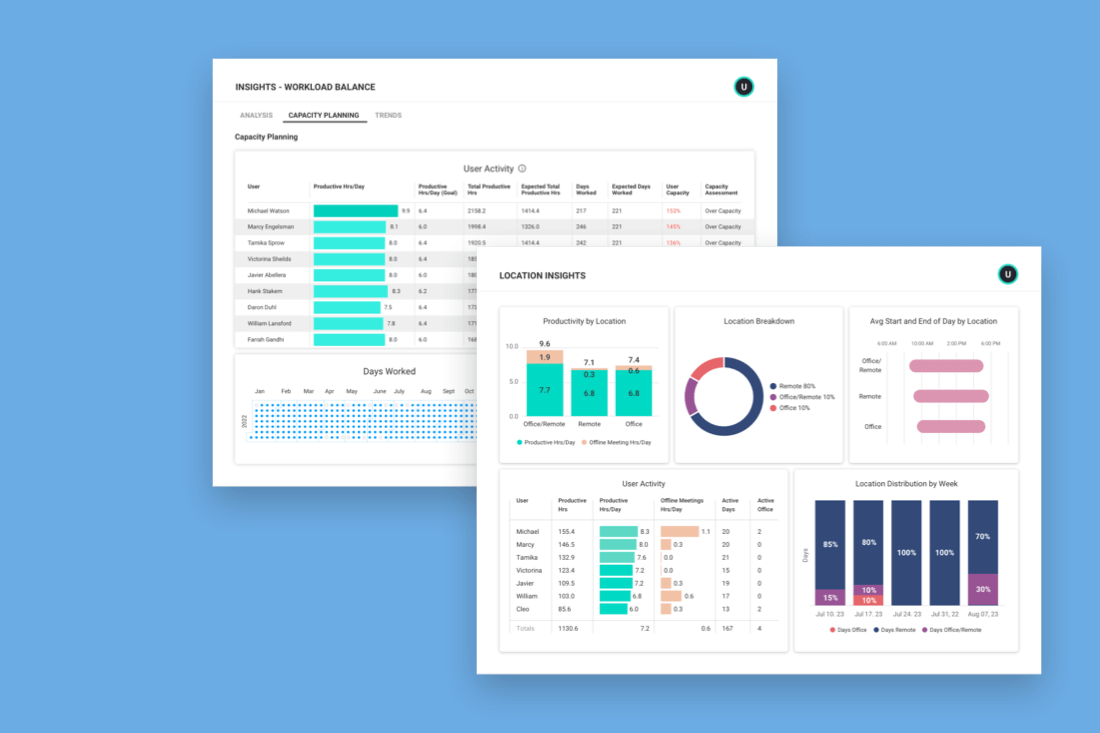
Struggling with staffing shortages or hiring freezes? This workforce analytics trend is one to embrace. Smart organizations use data analysis to do more with the teams they already have. Instead of defaulting to new hires — or worse, overworking current employees — they review weekly and monthly team productivity reports to uncover unused bandwidth and balance workloads. This approach reduces unnecessary headcount growth while improving productivity and morale. It’s how companies across industries regularly make faster and more cost-effective workforce decisions.
Getting into the habit of regularly reviewing capacity analytics helps you:
- Identify underutilized talent and redeploy skills where needed.
- Improve workforce planning accuracy.
- Prevent burnout by ensuring everyone’s carrying their fair share of the workload.
10. Personalized learning and career pathing
Forward-focused organizations are also using analytics to fuel professional growth. Instead of applying a one-size-fits-all approach to development, they analyze performance data to tailor learning paths and coaching conversations. This trend helps with retention — 94% of employees stay longer at companies that invest in helping them learn — while boosting the potential of your workforce at large.
Personalized development analytics is a great way to stay competitive in challenging markets by helping organizations:
- Identify specific skill gaps in real time.
- Design individualized coaching and growth plans.
- Strengthen retention through clear career progression.
Prepare for a data-driven workforce future with ActivTrak
Workforce analytics trends of the future aren’t just about collecting employee data. It’s an opportunity to fuel growth in new and unprecedented ways. The trends shaping 2026 point to one clear truth — successful organizations will continue to rely on deep analysis to make clear, confident decisions.
Want to make the most of workforce analytics at your organization? ActivTrak provides the visibility you need to put these trends to work today. Request a demo to see how we help more than 9,500 organizations use real-time data to guide decisions — without adding complexity.
This article was originally published on Oct 12, 2023, then updated on Oct 30, 2025